Tired of perfume that fades in an hour?
Find what actually lasts — and what
Fragrance• on Real Skin
Fragrance Intelligence. Researched in New York. Built for the Real World.
I've spent years watching expensive perfumes disappear before I reached the subway platform.
Not because the fragrances were cheap. Because they were mismatched — to the climate, to the skin chemistry, to the actual conditions of a real day. A $280 bottle that ghosts you by noon isn't a luxury. It's an expensive lesson in misplaced trust.
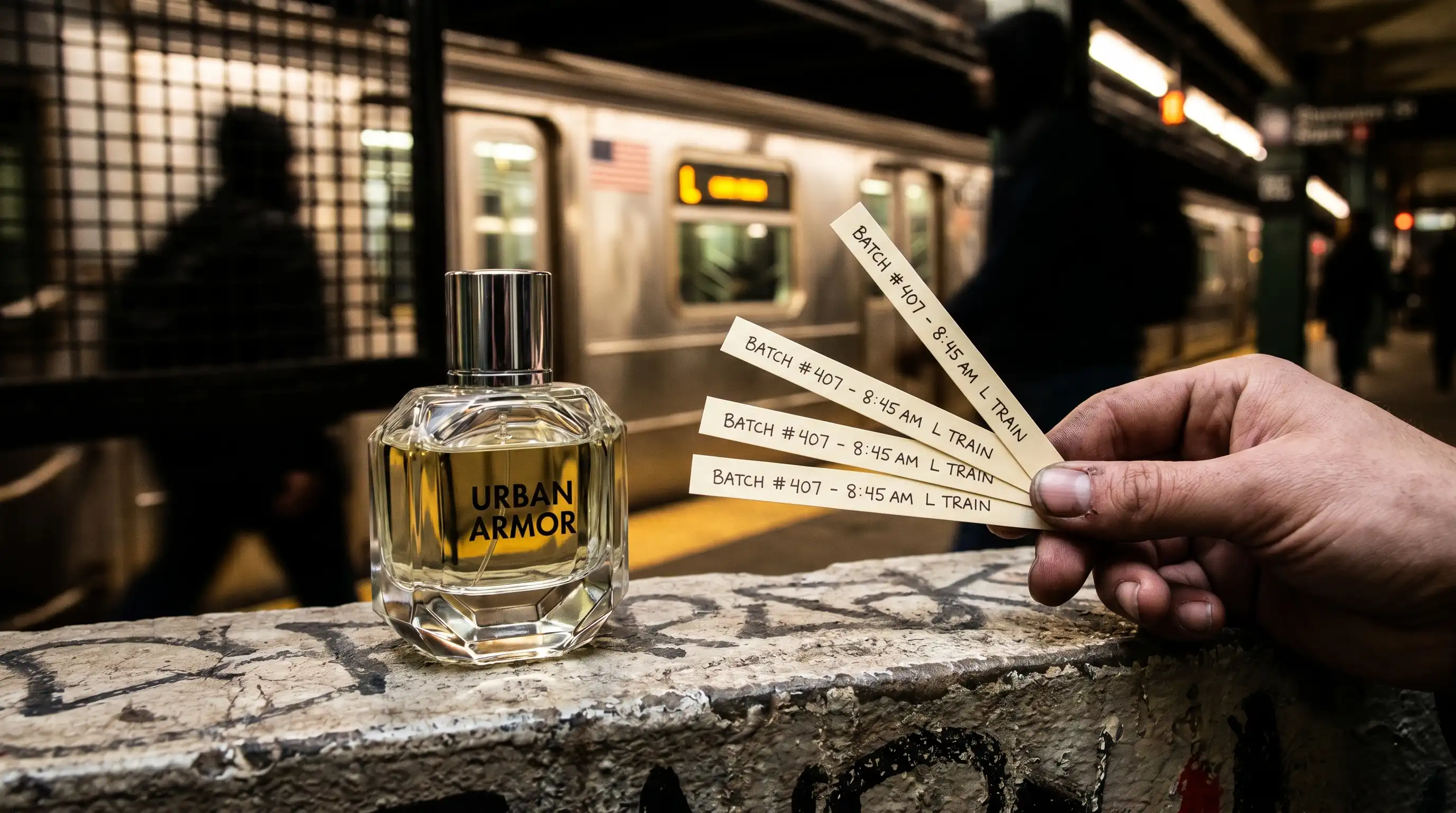
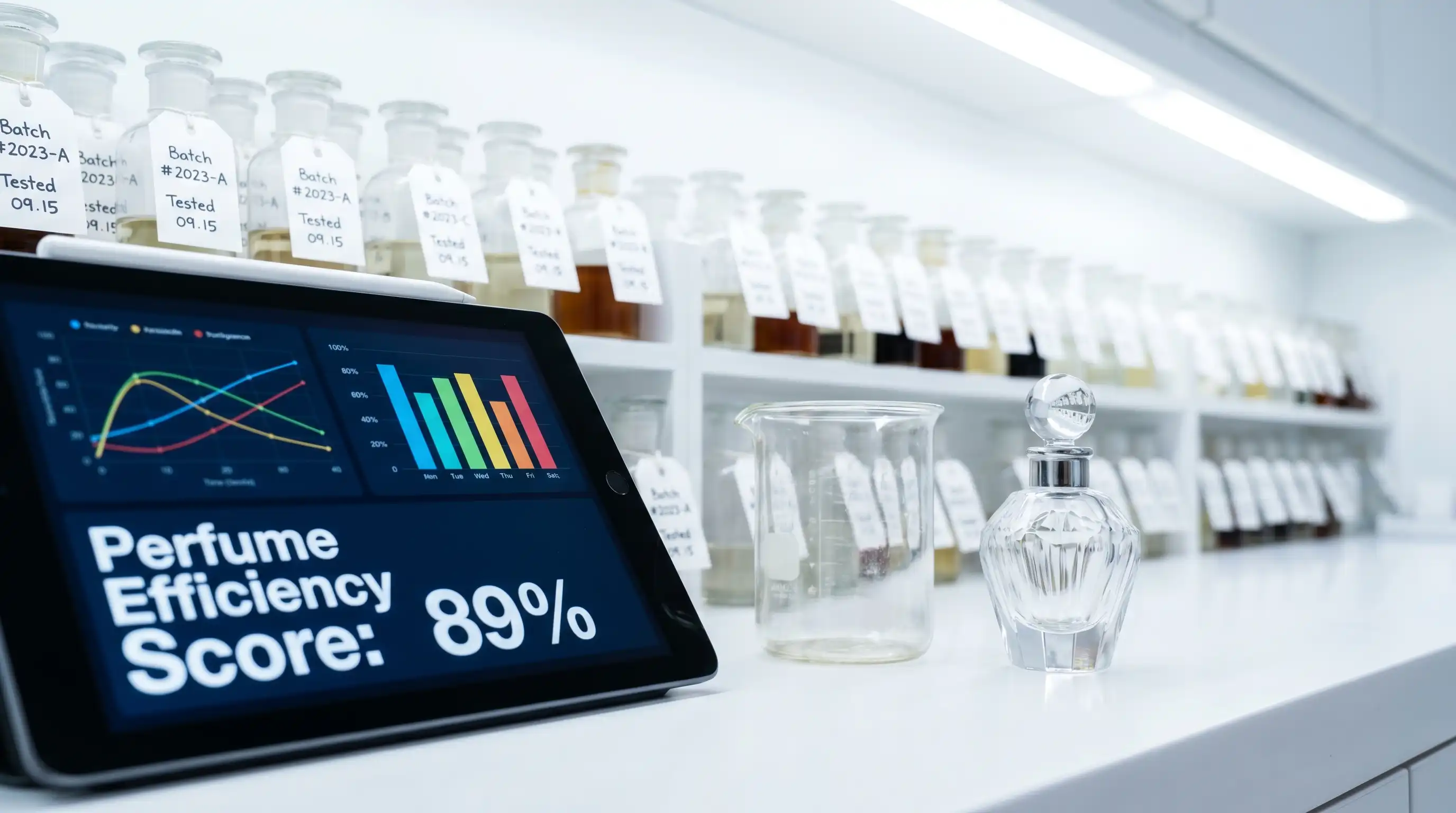
That mismatch is a solvable problem. Solving it, methodically and honestly, is exactly what we do here. Mist Deluxe is a Perfume Data Lab. Our approach is rooted in observation, structured field-testing, and performance analytics — not in press releases or carefully lit product photography. We are built on 4+ years of consistent wear-testing across 800+ individual scent profiles, evaluated in temperatures ranging from 40°F New York winters to 110°F summer heat indexes. Our database exists because no brand was willing to build it honestly. So we did.This is a resource for the intentional buyer. Whether you're a commuter trying to find a scent that survives the L train in August, an office worker navigating dry air conditioning eight hours a day, or a student who needs fragrance value that actually makes sense on a budget — our research was built with you in mind.
We organize everything around three pillars of truth: Environment, Economics, and Ethics. Climate performance. Real value. Responsible safety standards. Every recommendation on this site passes through all three.
Context Sentence: Before you spend a single rupee on your next bottle, it helps to understand what you are actually buying — our complete breakdown of types of perfume explained walks you through every concentration, from body mist to extrait, so you can match the format to your lifestyle and budget.
That Old Bottle on Your Shelf — Is It Still Any Good?
Most people assume fragrance lasts forever — sealed bottle, dark shelf, it should be fine. The reality is more complicated. Heat, light, oxygen, and even the ingredients themselves all work against a fragrance over time. Before you keep wearing something you've had for years, it's worth understanding do perfumes actually have an expiry date — because the answer changes depending on the formula, the storage, and how much of the bottle is left.
Why the Perfume You Loved in the Store Smelled Wrong at Home
You tested it on a strip. You liked it. You bought it. Then you put it on your skin and something was… off. This is one of the most common complaints in perfumery, and it has nothing to do with fake products or reformulations. Your body chemistry is rewriting the formula in real time. Our research intowhy perfume smells different on your skin t explains exactly what's happening — and how to use that knowledge to shop smarter going forward.
Longevity Starts at the Bottom — What Base Notes Actually Do
Every fragrance has three layers — and the one that determines how long it lasts on your skin is the one you smell last. Base notes are the foundation: the musks, woods, resins, and ambers that settle into your skin hours after the top notes have faded. If longevity is something you care about — and after an hour of wear that disappears, it should be — start by understanding what base notes are and why they mattert before you buy another bottle.
Why Perfume Fades in Heat — And What the Data Actually Reveals
The reality is simpler than marketing makes it.
Most luxury fragrances were formulated for temperate European climates — stress-tested in controlled conditions that bear little resemblance to a crowded platform at 34th Street in July. When ambient temperatures rise above 85°F, fragrance molecules evaporate at a significantly accelerated rate. The result is a scent that performs beautifully in a boutique and almost invisibly on your afternoon commute.
We call this Thermal Evaporation Trajectory — the rate at which rising heat draws fragrance molecules away from the skin surface. Every fragrance has a performance curve across temperatures. Very few brands publish it. After years of tracking how molecules behave in real-world transit conditions, we measure it ourselves, systematically, season after season.
What this means for you: before spending a dollar, you'll know exactly how a fragrance performs in your specific climate — not in an idealized lab setting.
Our Humidity-Impact Profiling adds a critical second dimension. Atmospheric moisture doesn't just affect comfort — it fundamentally changes how a scent cloud diffuses and sustains itself. Certain molecular compositions use ambient humidity as a natural carrier, genuinely extending projection. Others destabilize under the same conditions, collapsing within the first hour. After 800+ documented profiles, we know which is which.
The best long-lasting perfumes for summer aren't always the most expensive entries on the shelf. They are the ones — whether by design or fortunate chemistry — whose molecular profiles align with high-heat, high-humidity conditions. Our Summer Survival Guide isolates exactly those, filtered through every climate variable we track.
Our job isn't to overwhelm you with molecular chemistry. It's to take that complexity and hand you a clear, confident answer for your wardrobe.
→ Explore the [Summer Survival Guide] — climate-matched, field-tested, and updated each season.
The Economics of Fragrance — A Metric That Actually Clarifies Everything
Once climate performance is understood, a sharper question naturally follows: what are you actually paying for?
This is where most buyers stop doing the math. We never do.
Cost-Per-Wear Modeling reframes every purchasing decision with uncomfortable clarity. A $260 bottle that lasts four hours and demands daily reapplication costs more per wearing than a well-chosen $85 bottle with documented eight-hour longevity. The sticker price is, consistently, the least reliable number on the shelf.
What this means for you: you'll never again guess whether a bottle is worth the splurge. You'll have the exact cost-per-wearing calculated before you pay — what we internally call its Scent-Uptime value. The EDP vs EDT performance debate deserves equal honesty. Eau de Parfum carries a higher fragrance concentration — but concentration is not a proxy for longevity. Formula quality, molecular structure, and individual skin chemistry each play roles of equal weight. Our testing consistently reveals EDPs that justify every cent of their premium, alongside others that offer concentration without proportional performance. We document both, without diplomatic softening.
From there, we move into application science. Molecular Layering Efficiency is the structured practice of combining complementary fragrance families across skin, fabric, and hair — strategically, not randomly. Documented correctly, this technique measurably extends both projection radius and aromatic depth. A mid-range fragrance, layered with precision, can genuinely perform with the complexity of a niche offering. This isn't a workaround. It's informed chemistry applied practically.
For the budget-conscious student, the daily commuter, or the executive who simply refuses to waste money — Fragrance ROI becomes the only conversation worth having. And once you see your spending through this lens, impulse purchases based on bottle aesthetics become significantly less tempting.
→ The [Sillage & Projection Hacks] section covers every layering method we've documented, in full.
Not all fragrances are built the same. Before you spend a single rupee on your next bottle, it helps to understand what you're actually buying. Our complete breakdown of types of perfume explained walks you through every concentration — from body mist to extrait — so you can match the format to your lifestyle and budget.
Fragrance intelligence means more than picking a great scent — it means knowing what's real. Counterfeits flood the market, and most people can't tell the difference until it's too late. Our guide on how to spot a fake bottlegives you batch-code checks and physical tells you can verify before you buy.
Frequently Asked Questions
Heat accelerates the rate at which fragrance molecules evaporate off your skin — a process we document as Thermal Evaporation Trajectory. The warmer the air, the faster your top and middle notes burn through their lifecycle, leaving you with nothing before noon. Most luxury fragrances were formulated for cooler European climates, which is why they underperform in genuine summer heat
Cost-per-wear divides the retail price of a fragrance by the realistic number of wearings you'll get from a full bottle, based on application rate and documented longevity. A $250 perfume that lasts four hours and requires reapplication can cost more per wearing than a well-chosen $80 bottle that genuinely holds for eight. It is the most honest number in fragrance — and the one brands would rather you never calculated.
Higher concentration in an Eau de Parfum does typically mean more fragrance oil — but concentration alone doesn't guarantee longevity. Formula quality, molecular composition, and your individual skin chemistry each influence performance equally. We've tested EDPs that outlast their marketing promises and others that perform no better than a basic EDT at half the price.
Molecular Layering is the most effective technique — applying fragrance across multiple surfaces including skin, clothing fabric, and hair, where molecules adhere differently and release over a longer timeline. Unscented moisturizer applied before your fragrance also significantly improves bio-adhesion, giving volatile molecules something to cling to. These aren't hacks — they're applied chemistry, and they work regardless of your budget.
The fragrances that genuinely survive heat and humidity share a specific molecular profile — heavier base notes, lower volatility compounds, and compositions that were either intentionally or incidentally built for thermal resistance. Our Summer Survival Guide filters 800+ tested profiles down to the ones that hold up in real-world heat, ranked by Climate-Zone Performance Score rather than brand prestige or retail pric